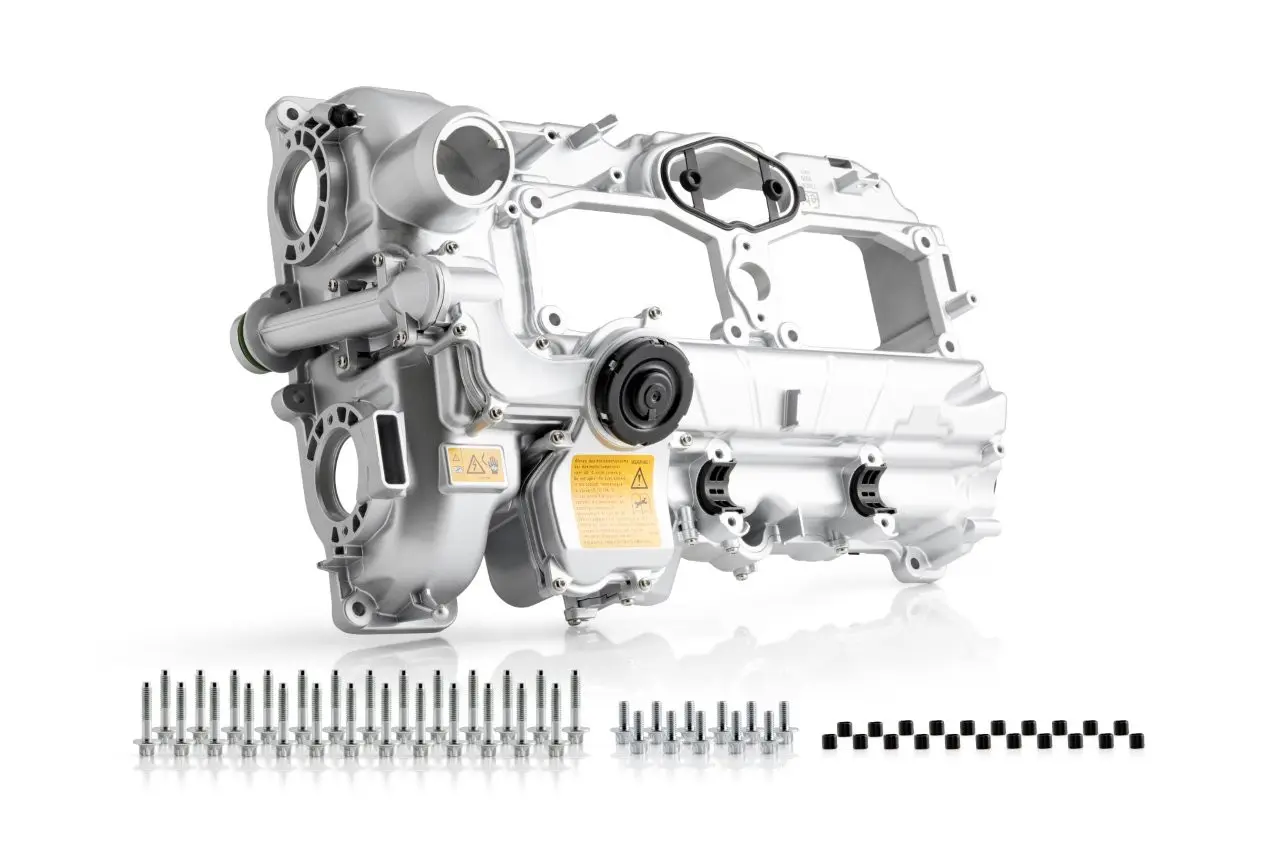
We have published a technical guide designed to help workshops and vehicle owners understand the problem, make informed repair decisions, and avoid unnecessary costs.
Modern diesel engines such as the PSA DV5 use EGR (Exhaust Gas Recirculation) and DPF (Diesel Particulate Filter) systems to comply with increasingly stringent emissions regulations.
While these technologies effectively reduce exhaust emissions, they also create a side effect that directly impacts the engine’s internal components.
High rates of exhaust gas recirculation cause soot particles and combustion residues to re-enter the engine. These fine contaminants accumulate in the intake system, crankcase and – most importantly – within the lubrication circuit. Suspended in the engine oil, they act as abrasive particles, accelerating wear on all components they come into contact with.
The original DV5 timing drive uses a 7 mm timing chain with a geometry that operates beyond its intended load capacity – even under ideal conditions. The combination of excessive chain articulation, high tensile loads, and oil contamination caused by the EGR system creates a situation in which premature wear is not only possible, but inevitable.
Over time, the consequences become increasingly severe: increased noise levels, timing chain tensioner wear, measurable chain elongation, and, in extreme cases, complete chain failure resulting in serious engine damage.
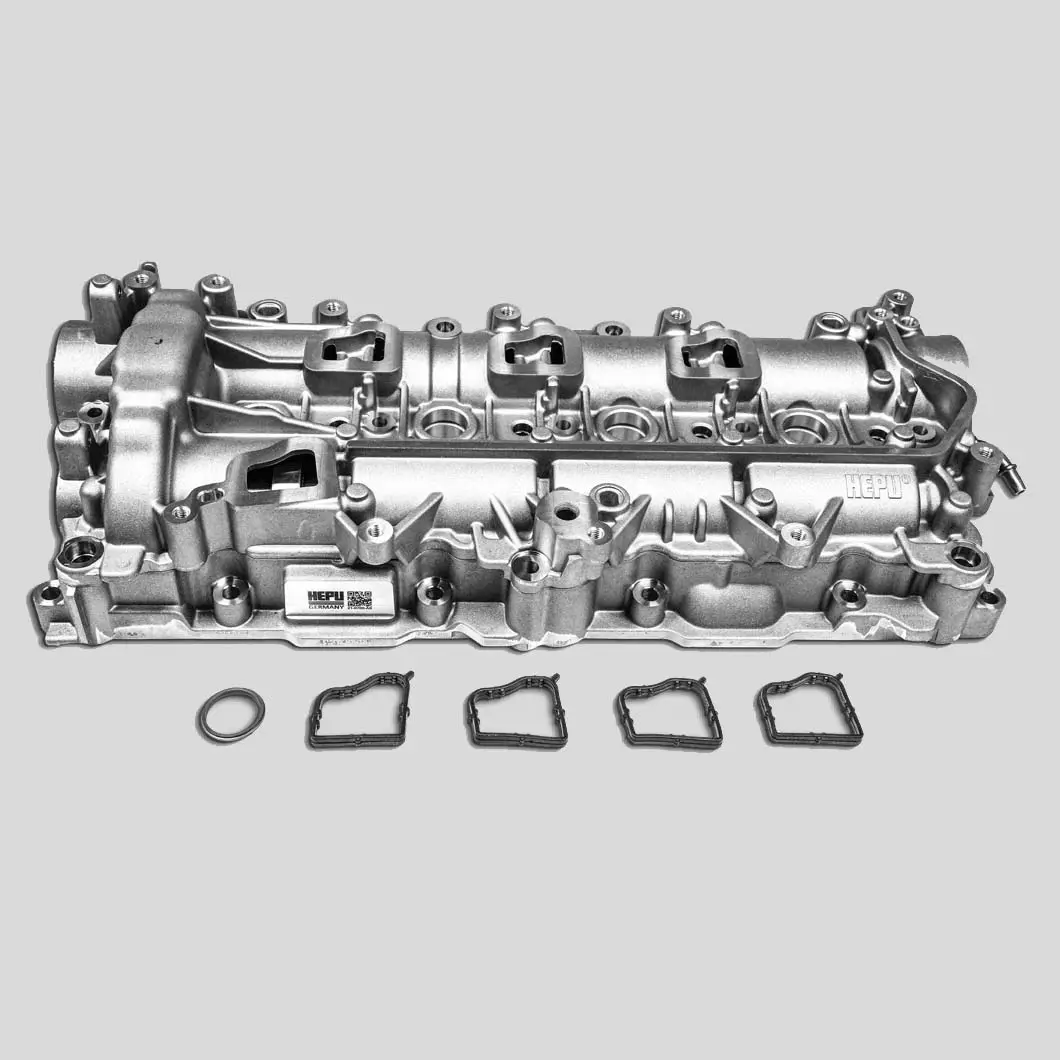
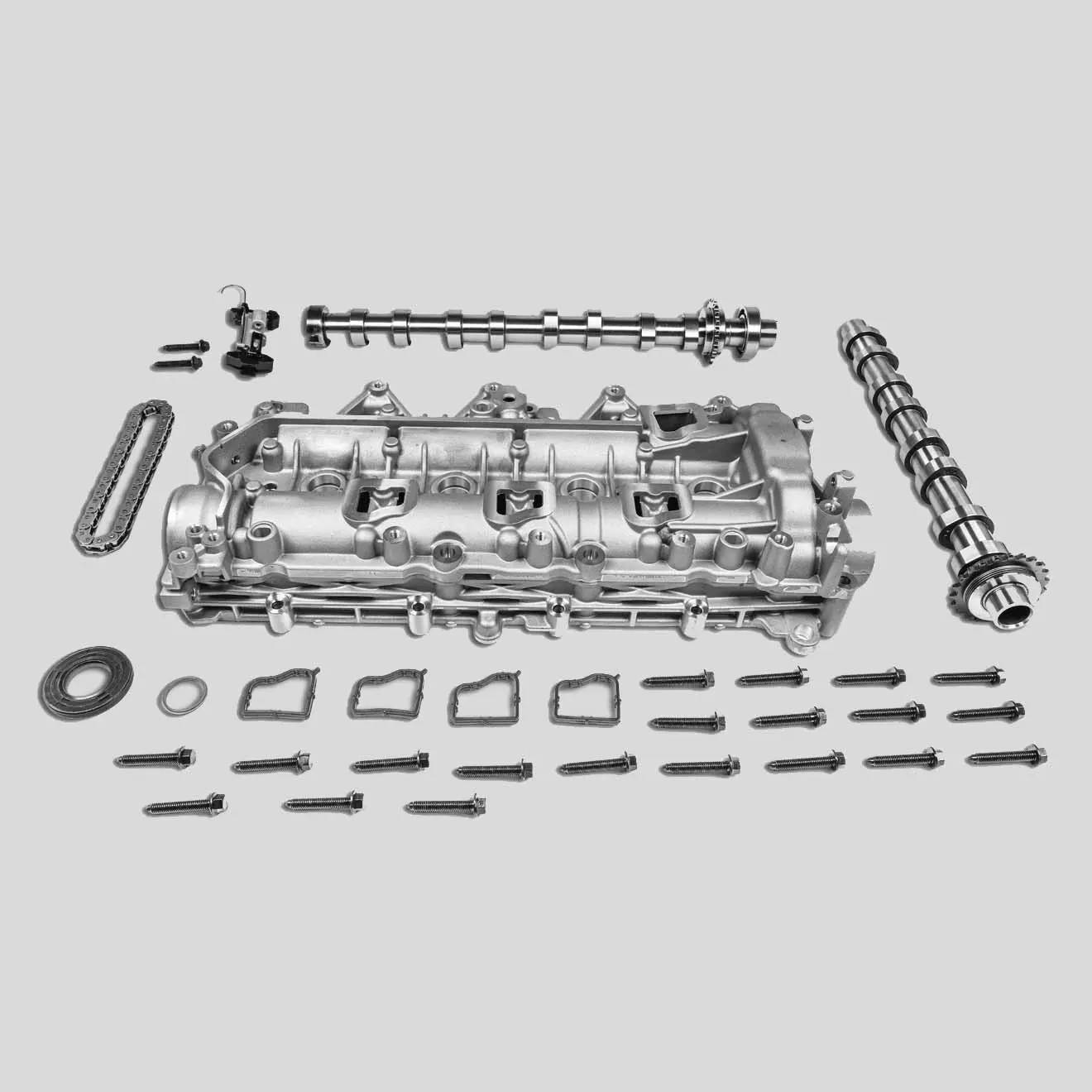
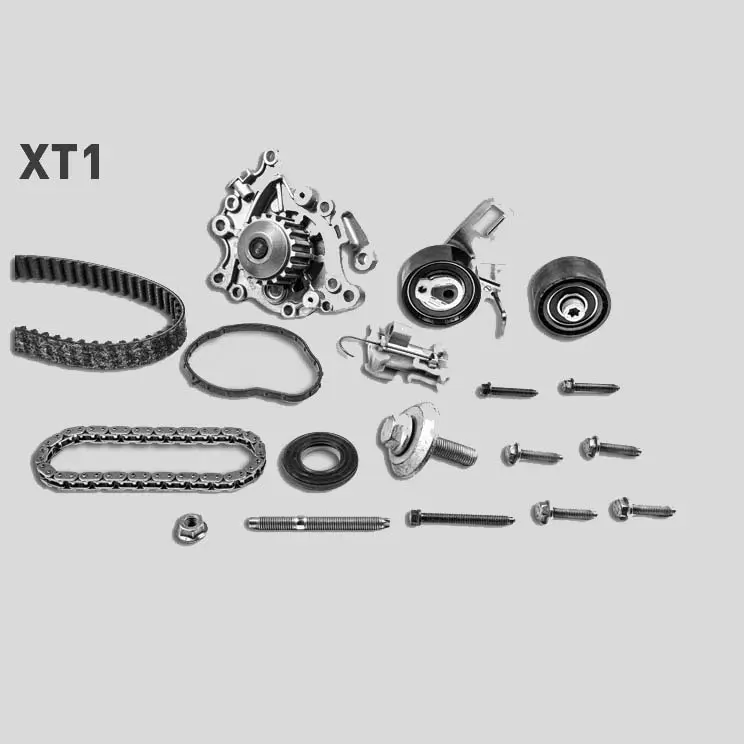
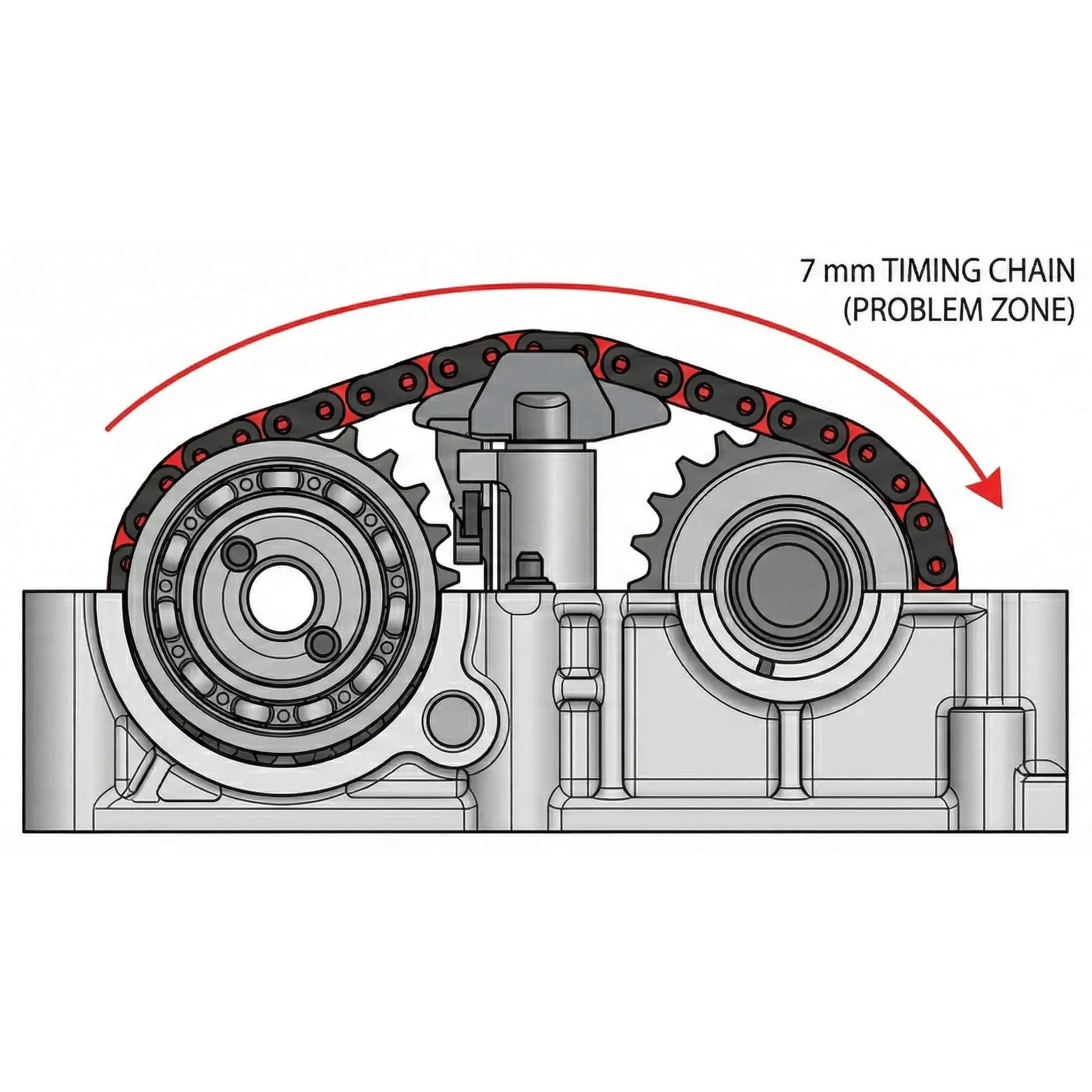
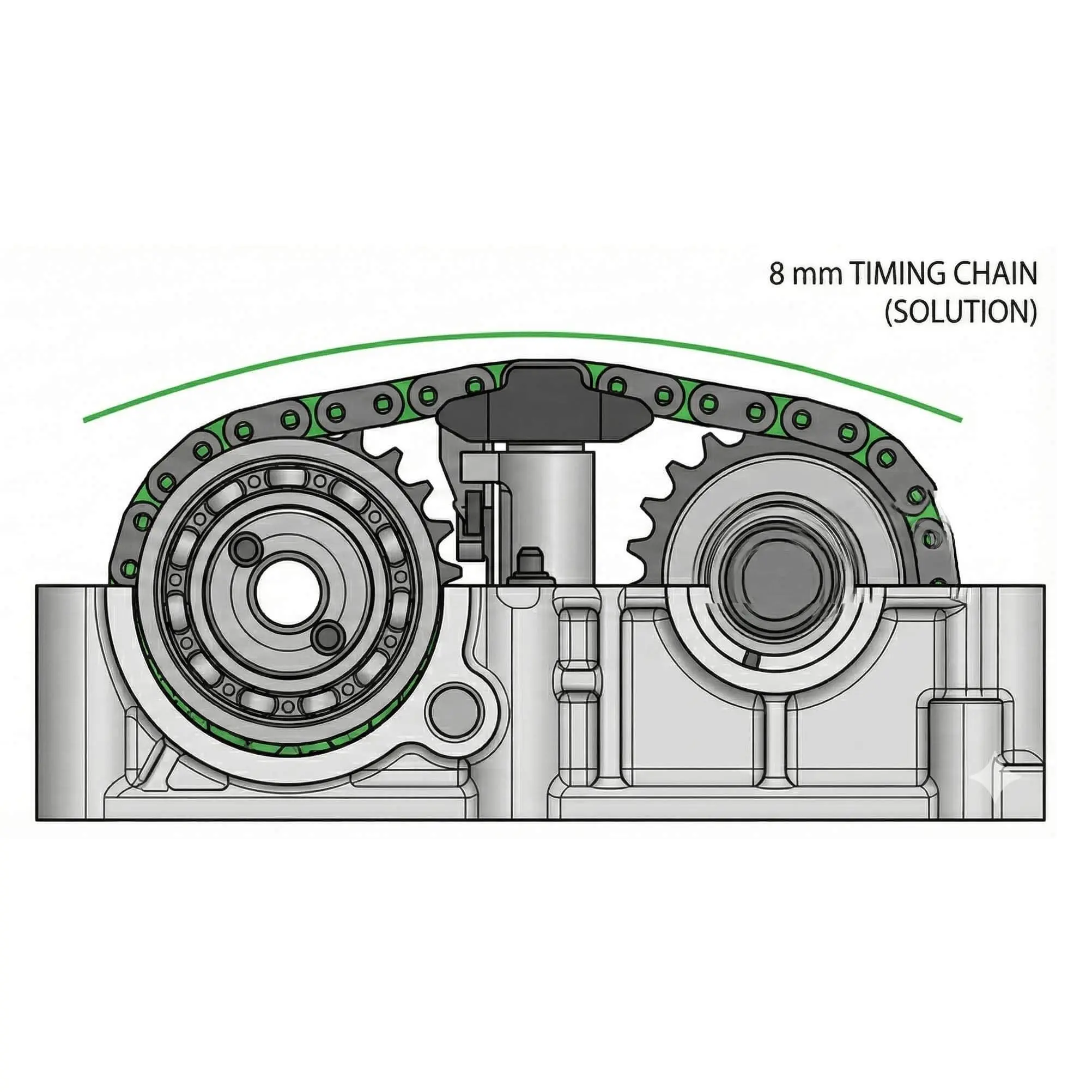
This is probably the most important point for workshops and vehicle owners. Installing a new 7 mm chain in the same system does not eliminate the root cause of the problem. The geometry remains unchanged. The overload conditions remain in place. Even a stronger 7 mm chain cannot overcome the fundamental design limitation.
The OEM recognized this issue and, in early 2023, introduced a comprehensive redesign of the timing drive system by switching to a wider 8 mm chain with modified sprockets. This updated design addresses the core problems: the revised geometry reduces chain articulation, the chain is 16% wider and offers greater tensile strength, and the system operates within its intended design parameters. The result is significantly reduced chain elongation and a substantially longer service life.
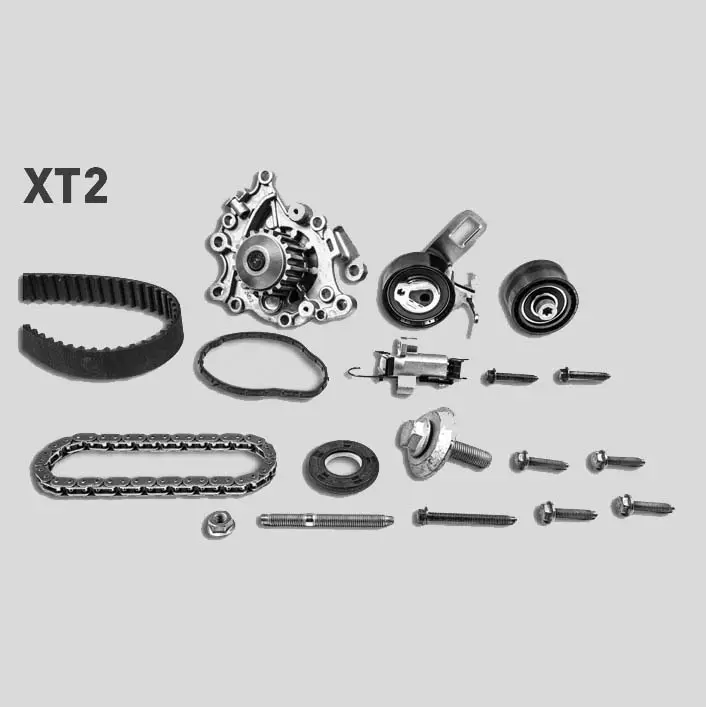
The two timing chain versions can be identified by the number of chain links and the tooth count of the camshaft sprockets:
Vehicles manufactured between 2018 and 2022 are predominantly equipped with the 7 mm version. Early 2023 represents a transition period during which both variants may be found, while from 2023 onwards, the 8 mm system became the standard configuration.
For any DV5 engine showing signs of timing chain wear – or as a preventive measure during major maintenance – upgrading to the complete 8 mm timing chain system is the only repair solution that addresses the root cause of the problem. In addition, the use of a high-quality 5W-30 engine oil and shortened oil change intervals is strongly recommended.
All of this information – including vehicle identification guidance and available repair kit options – has been compiled into a concise technical guide, available for free download.
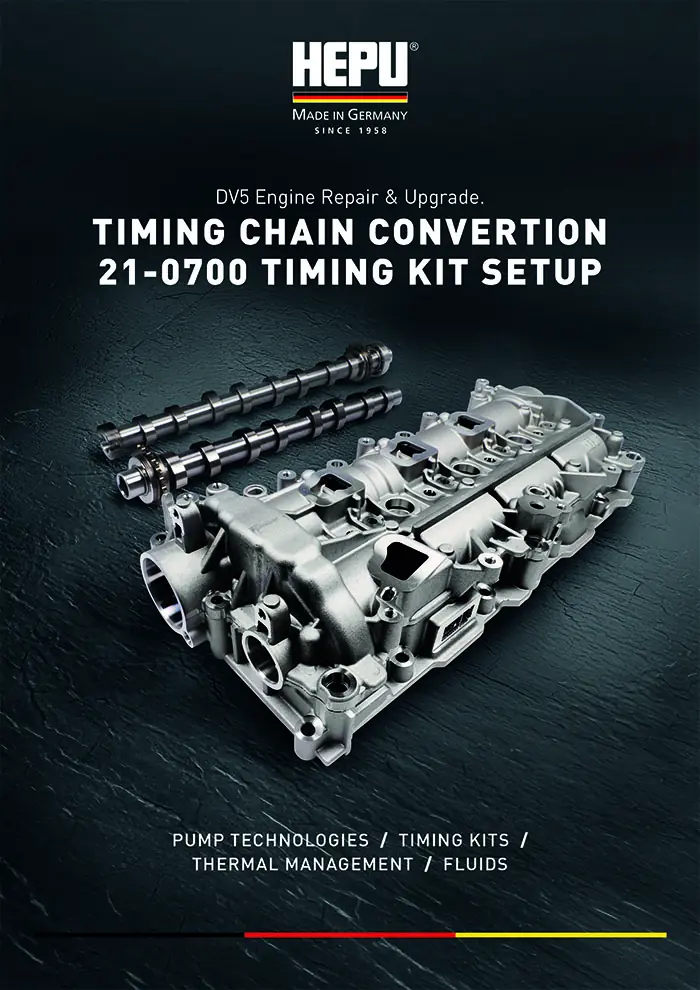
DV5 Timing Chain Upgrade Guide – 21-0700 Conversion Kit
A technical guide explaining the known timing chain wear issue in PSA DV5 engines and the recommended upgrade from the original 7 mm chain system to the improved 8 mm timing drive design. The document outlines the root cause of premature chain elongation, identifies affected vehicle generations, and demonstrates the benefits of the HEPU® 21-0700 upgrade solution.
Designed for workshops and engine repair specialists, the guide includes system identification criteria, upgrade recommendations, component references and practical service information to ensure a durable and reliable repair.