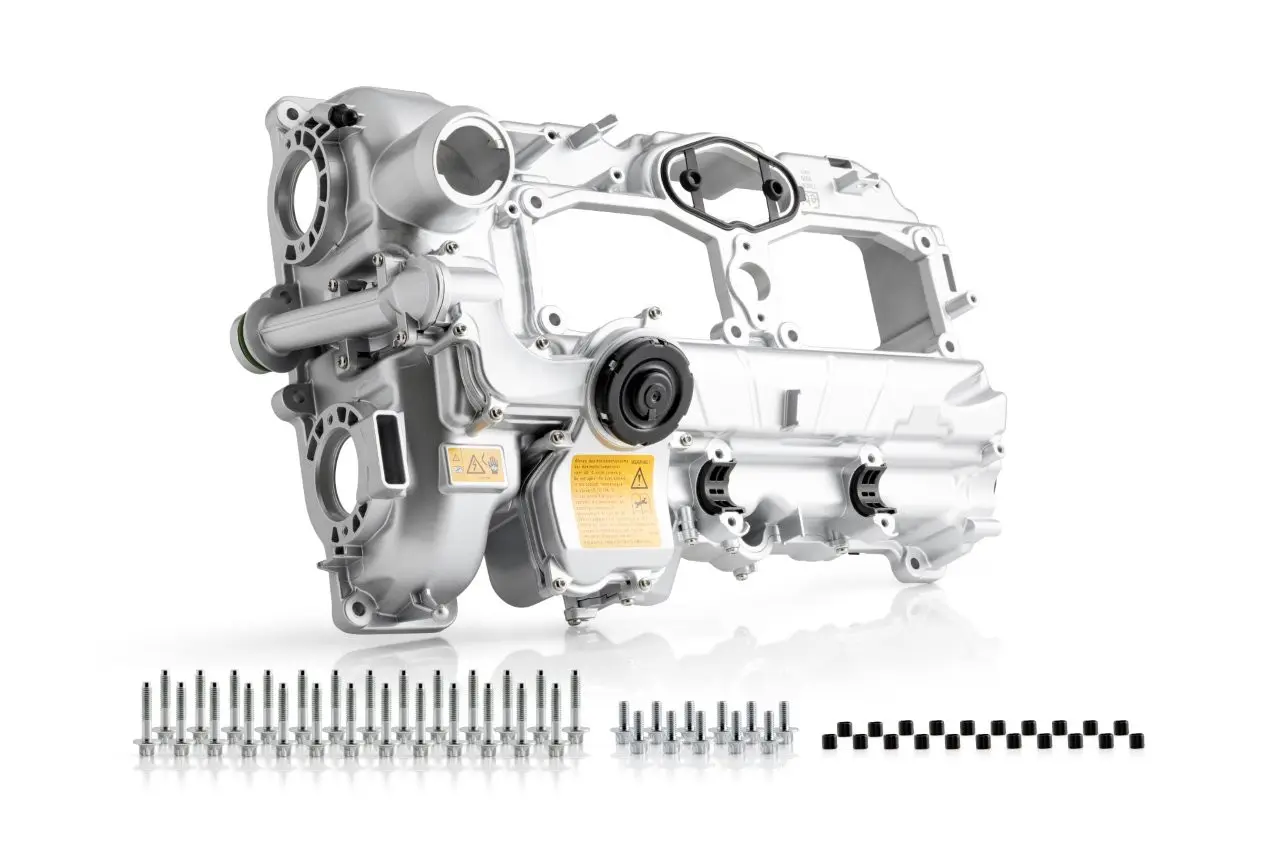
The timing system, regardless of drive type, is one of the most critical engine assemblies. Its failure does not only immobilize the vehicle but often leads to costly secondary damage – from bent valves to cracked pistons. Unlike many other systems, the timing system rarely gives clear warning signals before complete failure.
That is why professional service based on complete replacement of all cooperating components and knowledge of the most common installation errors is of key importance. This article analyses typical risks for chain timing drives – indicating practical ways to avoid them.
Which Technology Is Better – Belt or Chain?
Short answer: neither, if it is poorly serviced.
| Timing Belt | Timing Chain |
| Requires replacement according to intervals (60,000-120,000 km) | Theoretically “maintenance-free” (in practice: 150,000-250,000 km) |
| Does not signal an approaching failure | Often signals problems (noise) |
| Simpler diagnostics (visual condition assessment) | Requires excellent oil quality and short intervals |
| Shorter service time and lower replacement cost | More expensive and time-consuming service |
Summary
Timing system durability depends 70% on the service of related systems (cooling, lubrication) and 30% on the quality of the timing components themselves. No technology is “indestructible” if basic operating principles are violated.
Timing system service is not only replacing worn parts – it is a test of workshop professionalism. A warranty claim in this area brings not only financial losses (repeat labour, parts, possible compensation), but above all reputational damage. A customer whose car returned on a tow truck after a timing “repair” will not return to the workshop and will advise everyone they know against it.
On the other hand, a customer who drives trouble-free for the next 100,000 km after a complete replacement becomes an ambassador for the workshop and a source of lasting recommendations.
Professionalism starts with the details: precise part selection, use of the correct tools, consulting instructions and a holistic approach to engine service. In times when the “internet mechanic” gives destructive advice based on myths, the workshop mechanic must stand for knowledge, procedures and responsibility.